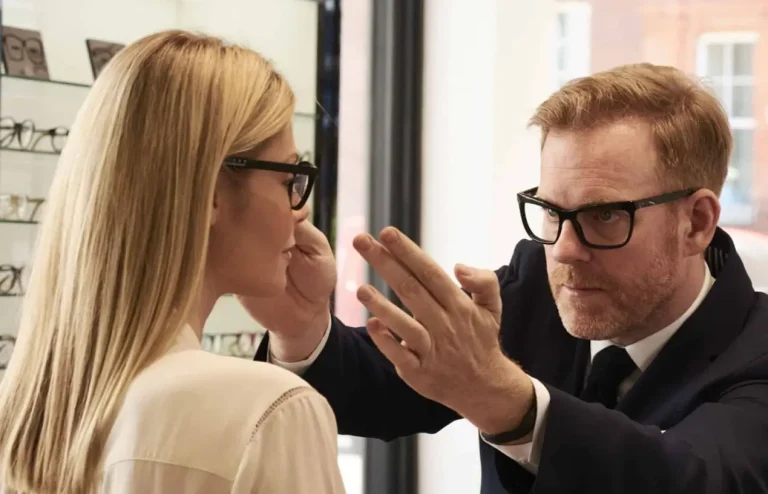


After years of watching people try on glasses, I’ve noticed something consistent: most of us reach for frames based on what’s trending or what catches our eye in the moment, rarely thinking about whether they actually work with our face. The result is a drawer full of glasses that feel slightly off, even if we can’t quite articulate why. Face shape matters, but not in the rigid, prescriptive way it’s often presented. It’s more nuanced than that.
The real issue isn’t finding a perfect categorical match. It’s understanding how your face’s proportions – width, length, the placement of your features – interact with frame geometry. When these elements align, glasses feel effortless. When they don’t, you notice it every time you look in the mirror. You adjust them more, feel self-conscious, or simply don’t wear them as much as you should.
Width and Balance
The most overlooked aspect of frame selection is width relative to your face. I’ve seen people with wider faces choose delicate, narrow frames thinking they’ll look more refined. The opposite happens. A frame that’s too narrow creates visual tension – it draws attention to the mismatch rather than complementing your features.
Conversely, oversized frames on a narrower face can overwhelm. The glasses become the focal point rather than an accessory. There’s a comfortable middle ground where the frame width roughly aligns with the widest part of your face, typically around the temples or cheekbones. This doesn’t mean exact matching – some variance works fine – but a significant mismatch is usually noticeable.
What I’ve observed is that people often underestimate their own face width. We’re used to seeing ourselves straight-on in mirrors, which can be deceptive. Looking at a three-quarter angle or side profile gives a clearer sense of actual proportions. If you’re uncertain, comparing your face width to the frame width when looking directly at someone can help calibrate your sense of scale.
Vertical Proportions and Frame Height
Face length – whether your face reads as more square, oblong, or somewhere in between – affects how frame height feels. A taller frame can elongate an already long face, which some people want and others don’t. A shorter frame on a very long face sometimes feels cramped, leaving too much empty space above and below.
I’ve noticed that frame height also interacts with where your eyes sit within the frame. If your pupils are positioned too high or too low in the lens, it creates an imbalance that feels off even if you can’t identify the specific problem. This is partly a fit issue – how the frames sit on your nose and ears – but it’s also about choosing a frame height that allows your eyes to sit naturally centered or slightly above center within the lens.
The relationship between your face length and frame height doesn’t need to be perfect, but there’s a range where things feel proportional. Frames that are too tall relative to your face length can feel heavy or costume-like. Too short, and they can look cramped or childish.
Angles, Curves, and Visual Contrast
This is where personal preference and face shape genuinely intersect. Angular frames tend to add definition and contrast to rounder faces. They create visual interest through the interplay of sharp lines against softer features. On an already angular face, very sharp frames can feel harsh or overdone, though this is highly subjective and depends on the overall look someone is going for.
Rounded or curved frames soften angular faces. On rounder faces, they can either harmonize (creating a cohesive, soft aesthetic) or disappear into the face, depending on frame color and material. Some people love that blended look. Others want frames that create contrast and stand out.
What matters most here is intentionality. If you’re choosing rounded frames on a round face because you genuinely like how they look and feel, that’s a valid choice. If you’re doing it because you think you’re supposed to, you might end up with glasses that don’t feel like you. The same applies to angular frames on angular faces. Contrast can be striking and appealing, but so can harmony.
Color, Material, and How Frames Sit on Skin
Frame color and material affect how glasses interact with your face in ways that go beyond aesthetics. Darker frames create more visual separation from your face, which can be grounding and flattering. Lighter frames blend more, which some people prefer for a softer look. Tortoiseshell and warm metals tend to work across a wider range of skin tones, while very cool silvers or pure blacks can clash with certain complexions.
Material also matters practically. Plastic frames sit differently on your face than metal frames. Plastic tends to be heavier and can shift more easily, affecting how centered your eyes are in the lens. Metal frames are typically lighter and more adjustable. If you have a smaller nose bridge, metal frames with adjustable nose pads might feel more secure than plastic frames that rest more heavily on your face.
I’ve seen people struggle with frames that are technically the right size and shape but feel uncomfortable or unstable because of material choice or fit. A frame that doesn’t sit properly on your face will always feel wrong, regardless of how well it matches your face shape.
The Bridge and Nose Fit
This is the detail most people overlook entirely until they’re wearing glasses that slip down constantly. Bridge width varies significantly across frames, and it needs to match your nose bridge width reasonably well. Too wide, and the glasses slide. Too narrow, and they pinch or sit too high.
The nose bridge also affects how the frame sits relative to your eyes. If the bridge is too wide, your eyes might sit too far from the lens, affecting your view through the optical center. If it’s too narrow, the frame might sit too close to your face. Neither is ideal for comfort or vision.
Adjustable nose pads on metal frames give you flexibility here, which is why many people find metal frames more comfortable than plastic. Plastic frames have a fixed bridge, so the fit is either right or it isn’t. If you have a narrower bridge, this matters more than if you have a wider one, since there’s more variability in plastic frame bridge widths.
Trying On and the Adjustment Period
When you try on glasses, the first impression matters, but it’s not everything. Frames that feel slightly odd initially sometimes become your favorite after a few days of wearing them. Your eye adjusts, and what felt unfamiliar becomes normal. That said, if frames feel actively uncomfortable – pinching, sliding, or creating pressure points – that won’t improve with time.
The best approach is to try on multiple styles, spend a few minutes in each pair, and notice not just how they look but how they feel. Do they sit evenly on your nose? Do they feel balanced on your ears? Can you see clearly through the center of the lens? These practical questions matter as much as whether the shape theoretically matches your face.
I’ve also noticed that people often choose frames based on how they look in the store mirror, then feel differently about them at home in natural light. If possible, step outside or look at yourself in different lighting before committing. The frame that looks perfect under fluorescent store lights might feel different in daylight or in your home.
Ultimately, the best frames are the ones you’ll actually wear. A technically perfect frame that sits in a drawer because it doesn’t feel like you is worse than a slightly unconventional choice that you reach for every day. Face shape is a useful starting point, but your comfort, confidence, and personal style should always be the final arbiter.