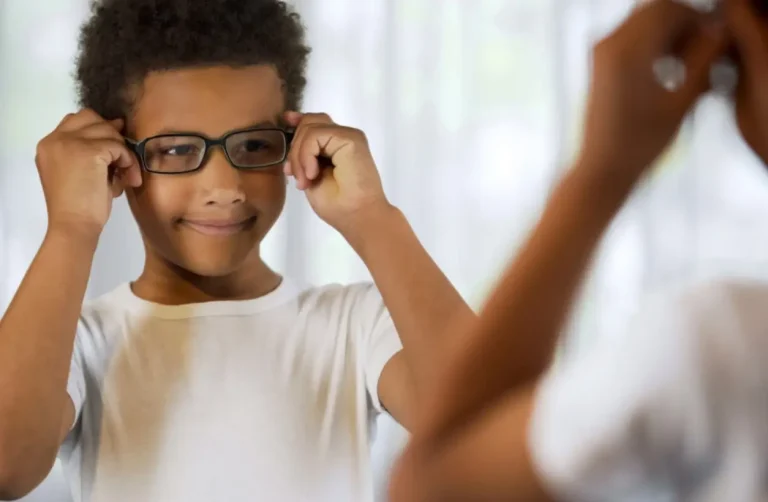


After years of fitting children with glasses, I’ve noticed that parents often approach the process as though they’re buying a pair of shoes – measure, pick something that looks decent, and move on. The reality is messier. A child’s glasses need to work within their actual daily life: how they play, whether they’ll tolerate wearing them, what their vision demands really are, and how quickly they’ll grow out of the frame. Getting this wrong doesn’t just mean wasted money. It means a pair of glasses sitting in a drawer while a child squints through school.
The first thing that strikes me is how often the frame size gets overlooked. Parents will select frames based on appearance or brand name, then wonder why their child complains that the glasses slip down or pinch behind the ears. Frame fit isn’t cosmetic – it determines whether the child will actually wear them. A frame that’s too large will slide during movement, throwing off the optical center and making vision worse. A frame that’s too small creates pressure points that become uncomfortable within an hour. The bridge should sit comfortably on the nose without gaps, and the temples should rest gently against the sides of the head without pressing into the skin.
I’ve also learned that children’s proportions change rapidly, and this affects how frames sit. A seven-year-old has a different face shape than a nine-year-old. The bridge of the nose is narrower, the head is smaller, and the distance between the eyes varies. This is why frames marketed as “one size fits all” or labeled only by age range often disappoint. The best approach is to have the child actually try on frames and sit with them for a few minutes. Watch how they move their head. Do they tilt their chin up to see through the bottom of the lens? That’s a sign the frame is too large. Are they squinting or moving their head to look around the frame? The optical center might be off, or the frame might be tilted.
Material and Durability Under Real Conditions
Frame material matters more than many parents realize, though not always in the way they expect. Plastic frames are lighter and generally more forgiving when a child drops them or sits on them. Metal frames can bend out of alignment more easily, but they’re often more durable in the long term if they’re quality construction. The real consideration isn’t which material is “better” – it’s which one matches how your child actually behaves. A child who’s rough with belongings or plays contact sports benefits from plastic frames that can absorb impact. A child who’s careful and spends time on screens might do fine with metal.
Lens material is where I see the most confusion. Standard plastic lenses are fine for most children, but there are situations where alternatives make sense. Polycarbonate lenses are significantly more impact-resistant and are worth considering if a child is active in sports or has a history of breaking glasses. They’re also lighter, which can reduce the overall weight on a child’s nose and ears. High-index plastic lenses are thinner and lighter, which matters more for children with higher prescriptions – a thick lens can look visually different and sometimes feels heavier. Anti-reflective coating reduces glare and makes the lenses look clearer, which some parents find worth the extra cost. However, it does require more careful cleaning, and children aren’t always gentle with their glasses.
Prescription and How It Changes
A child’s prescription often isn’t static. Myopia (nearsightedness) in particular tends to progress during childhood and adolescence, especially in school-age years. This means that glasses prescribed at age six might need adjustment by age eight. I’ve watched parents buy expensive frames and then feel frustrated when the prescription needs updating within a year or two. This is normal, not a sign that something went wrong. The practical takeaway is to avoid overspending on frames early on, knowing they’ll likely need replacement sooner than adult glasses would. Budget-friendly frames that fit well are often smarter than premium options when a child is still in the growth phase.
The prescription itself deserves attention too. Some children are prescribed glasses for distance vision only – for seeing the board at school – while others need them for all-day wear. Some have astigmatism, which affects clarity at all distances. A few have presbyopia or other complications, though this is rarer in children. Understanding what the prescription is actually for helps determine whether your child needs to wear glasses constantly or just in certain situations. This affects frame selection because a child who wears glasses all day needs different comfort considerations than one who puts them on for class and takes them off afterward.
The Adjustment Period and Realistic Expectations
One thing I’ve learned to explain clearly is that adjustment takes time. When a child first gets glasses, especially if they’ve been struggling with blurred vision for a while, the sudden clarity can feel strange. Their brain has adapted to seeing the world slightly out of focus. Suddenly, everything is sharp, and that can feel overwhelming or even slightly disorienting for a few days. Some children also report mild headaches or eye strain in the first week or two as their eyes and brain recalibrate. This usually passes. What doesn’t pass is a frame that doesn’t fit or lenses that aren’t properly aligned, so distinguishing between normal adjustment and an actual problem is important.
I’ve also seen children resist wearing glasses for social reasons. They worry about how they look or fear being teased. This is real, and it matters. Involving the child in frame selection – letting them choose colors or styles they actually like – can help. Some children feel more confident in frames they’ve chosen themselves. Others respond better to seeing other kids or role models wearing glasses. But sometimes the resistance is deeper, and it requires patience and consistency from parents rather than a different pair of frames.
The durability question often comes down to how the glasses are stored and handled. A case matters more than people think. Glasses left on a desk or in a backpack without protection get sat on, bent, or scratched. A simple protective case costs little and extends the life of a pair significantly. Teaching a child where to put their glasses when they’re not wearing them – and making it a habit – prevents most accidental damage.
Over time, what I’ve observed is that the best glasses for a child aren’t necessarily the most expensive or the most fashionable. They’re the ones that fit well enough that the child forgets they’re wearing them, that correct the child’s vision accurately, and that are durable enough to survive the way children actually live. Everything else – brand, style, special coatings – is secondary to those three things. When parents focus on fit first and durability second, they usually end up with glasses that work.