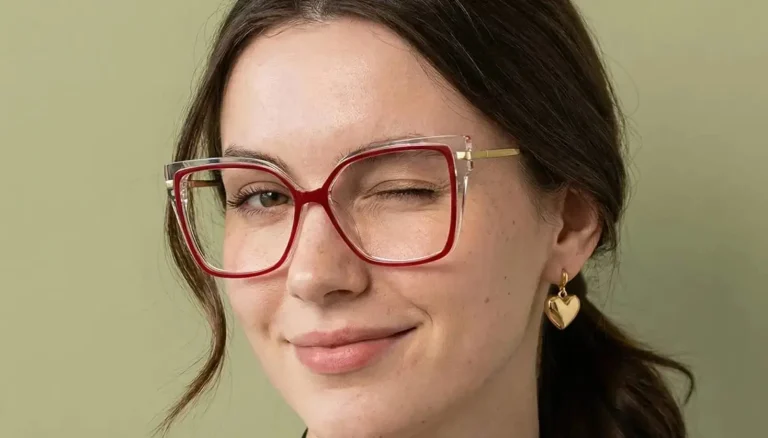


After years of watching people try on frames, I’ve noticed something consistent: the frames that look best aren’t always the ones that follow the rules. Someone with a round face will occasionally walk out in round frames and look genuinely striking, while another person with the same face shape looks diminished by them. The difference isn’t magic. It comes down to how the frames interact with the actual proportions of your face, your coloring, and the way you carry yourself.
Cat-eye and round frames sit at opposite ends of the spectrum in terms of visual effect. Cat-eyes lift and sharpen. They create angles where none existed before. Round frames soften and emphasize curves. They can ground a face or make it feel smaller, depending on the scale and placement. Neither is inherently better. What matters is whether the frame’s geometry actually complements what you’re working with.
Face Shape as a Starting Point, Not a Rule
The conventional wisdom says round faces need angular frames to add definition, and angular faces need rounded frames to soften them. I’ve seen this work beautifully, and I’ve also seen it fail completely. The reason is that face shape is only one variable. A person with a round face but strong, angular cheekbones might actually look better in cat-eyes because those frames echo the cheekbone structure rather than fighting it. Someone with a square jaw but soft, rounded eyes might feel more like themselves in round frames because the frame shape mirrors how their face naturally reads.
What I’ve observed is that the most successful frame choice usually involves some element of agreement with your face, not pure contrast. If your face has inherent angles, a slightly angular frame tends to feel cohesive. If your face is naturally soft and curved, a rounder frame often feels like it belongs. This doesn’t mean you can’t wear the opposite, but you’re swimming upstream a little, and the frame has to be genuinely exceptional to overcome that.
Scale and Proportion Matter More Than You’d Think
A small, delicate cat-eye on someone with a large, broad face can look lost. A large, oversized round frame on someone with fine, delicate features can overwhelm them. I’ve seen people reject entire frame styles because they tried on the wrong size first. The geometry of the frame – whether it’s angular or rounded – is almost secondary to whether the frame occupies the right amount of real estate on your face.
Cat-eyes tend to work well when they have enough presence to actually create visual lift. If they’re too small or sit too low, they don’t do much of anything. Round frames need to feel intentional, not like they’re drowning your face or making it look even rounder than it is. The best round frames I’ve seen on people with round faces are actually medium-to-large in scale, which creates a sense of boldness rather than reinforcing roundness.
How Frame Placement Changes Everything
Where a frame sits on your face is almost as important as its shape. A cat-eye that sits high on the bridge and lifts toward the temple actually does create a lifting effect. One that sits lower and doesn’t have that upward angle looks more like a regular angular frame. Round frames that sit higher on the face tend to feel more modern and intentional. Round frames that sit lower can sometimes read as dated or overly soft.
I’ve watched people with the exact same face shape have completely different results based purely on frame placement. Someone might try on a cat-eye that doesn’t sit right and assume the style doesn’t work for them, when really it was just the fit. Proper adjustment or finding a frame with a different bridge height or temple angle can change the entire outcome.
Color and Material Create Their Own Impact
A tortoiseshell cat-eye reads differently than a matte black cat-eye. A clear acetate round frame feels different than a metal round frame. The material and color of the frame can actually shift how much the shape itself matters. A very light, transparent round frame in a neutral color can feel less “round” because there’s less visual weight. A bold, opaque cat-eye in a dark color emphasizes the angular geometry more dramatically.
I’ve seen people choose frames based on shape alone and then feel off because the color or material didn’t work with their coloring or the overall impression they wanted to create. A warm-toned tortoiseshell cat-eye can feel completely different on someone with cool undertones versus warm undertones. A delicate metal round frame feels different on someone who tends toward minimalist style versus someone who likes bolder, more statement-making pieces.
Personal Presence and Confidence
There’s something I’ve noticed that doesn’t get talked about much: the frame that suits you is often the one that makes you feel like yourself. Someone might theoretically be a “round frame person” based on every conventional measure, but if they feel more confident and present in cat-eyes, that confidence changes how the frames actually look on them. The frame becomes an extension of how they move through the world rather than something that’s being imposed on them.
This isn’t about ignoring proportions or pretending that geometry doesn’t matter. It’s about recognizing that the best frame choice involves both the objective visual elements and the subjective experience of wearing them. I’ve seen people walk out of the shop in frames that shouldn’t theoretically work but do because they own the choice. And I’ve seen people in objectively perfect frames look uncomfortable because the style doesn’t match how they see themselves.
The practical approach is to try both styles if you’re genuinely uncertain. Pay attention not just to how they look in the mirror, but to how you feel wearing them. Notice whether you find yourself pushing them up, adjusting them, or touching them constantly – that’s often a sign the fit or the style isn’t quite right. Look at yourself in different lighting and at different angles. See if the frame disappears into your face or if it feels like it’s sitting on top of your face. The right frame, whether cat-eye or round, tends to feel integrated rather than applied.