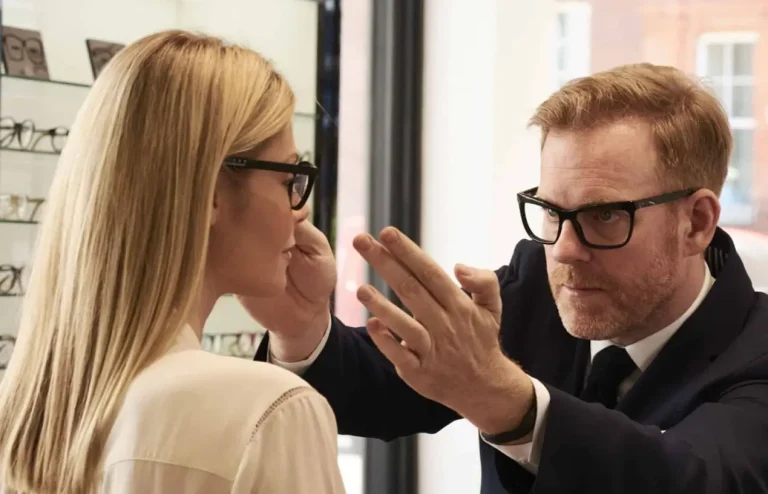


After years of working with different face shapes and eyewear choices, I’ve noticed that the divide between classic and modern frames isn’t really about fashion trends or what’s “in.” It’s about how the frame geometry interacts with your face, your daily activities, and what you actually need from your glasses. People often assume they should pick one or the other based on what looks good in a mirror for five seconds. The reality is more nuanced.
Classic frames – think browline, clubmaster, or traditional wayfarer proportions – tend to have a few consistent features. The front is wider relative to the bridge. The lens shape is often more rounded or has defined corners. The temples are typically straightforward, sometimes with a slight curve. These proportions came about because they worked well on a broad range of faces, and they’ve persisted because that fundamental logic hasn’t changed. What’s interesting is that classic frames often feel more forgiving when it comes to fit. A slightly loose or tight classic frame can still look intentional. The design has enough visual weight that minor adjustments don’t throw off the whole appearance.
Modern frames operate on a different principle. They tend to be lighter, with thinner materials and more minimal geometry. The front might be narrower, the bridge smaller, the overall footprint less pronounced. Some modern designs push toward geometric shapes – hexagons, ovals, or asymmetrical cuts – that would look odd in a classic context. The appeal here isn’t just aesthetic. A lighter frame genuinely reduces pressure on the nose and ears over an eight-hour workday. If you’re wearing glasses constantly and your job involves screen time or precision work, that weight difference registers.
Fit and Face Shape Considerations
I’ve fit hundreds of people into both styles, and what I’ve learned is that classic frames work best when there’s a clear visual contrast between the frame and the face. If you have a rounder face, a classic browline with defined edges gives you structure. If your face is angular, a classic frame with softer curves can balance that out. The frame becomes a visual anchor. Modern frames, by contrast, tend to blend in more. They don’t announce themselves. This works beautifully if your goal is to feel like the glasses are barely there – functionally and visually. But it also means the frame has less ability to reshape how your face reads.
Bridge fit is where I see the biggest practical difference. Classic frames usually have a more substantial bridge because the design assumes a certain amount of nose width. If your bridge is narrow, a classic frame might sit too high or slide down. Modern frames often come with adjustable nose pads or narrower bridge options built in. This isn’t a design flaw in classic frames – it’s just that modern manufacturing makes it easier to offer variations. But it’s worth knowing that if you have a narrower or wider bridge than average, modern frames might require less adjustment work.
Lens Options and Functional Demands
The frame style you choose also affects how easily you can get the right lens technology into your glasses. Classic frames, especially those with larger lenses, can accommodate progressive lenses (bifocals without visible lines) more gracefully. The larger lens area means more room for the optical zones to work without visible distortion at the edges. Modern frames, particularly those with smaller or more geometric lens shapes, can be trickier. A hexagonal or very narrow oval lens limits the space available for progressive zones. This matters if you need vision correction at multiple distances. I’ve had people choose a modern frame they loved, then discover that their progressive lenses feel cramped or the distortion bothers them.
Anti-reflective coatings, blue-light filtering, and photochromic (light-sensitive) lenses work equally well in both styles. But if you’re doing detailed work – drafting, jewelry making, surgery – and you need a specific lens geometry to support that, classic frames with their larger, more predictable lens shapes often give you more flexibility. Modern frames can absolutely work for this, but you might need to be more deliberate about which specific model you choose.
Durability and Long-Term Wear
Classic frames, built on proportions that have been refined over decades, tend to age well visually. A well-made classic frame from ten years ago still looks current. Modern frames, especially those that follow very specific contemporary trends, can feel dated more quickly. This isn’t a judgment – it’s just how design cycles work. If you’re someone who wears the same glasses for three or four years, that’s worth considering.
Structurally, modern frames can be more durable in some ways because they use lighter materials and have fewer stress points. A thinner metal or acetate doesn’t flex as much, which means fewer micro-fractures over time. Classic frames, particularly those made with heavier materials, can develop wear patterns – the bridge might weaken, the hinges might loosen. But they’re also often easier and cheaper to repair because the design is straightforward and parts are widely available.
What I’ve observed most often is that the frame style matters less than the quality of construction. A well-made modern frame will outlast a poorly made classic frame. But if you’re comparing similar quality levels, classic frames tend to be more repairable and replaceable because the parts ecosystem is larger.
The Practical Middle Ground
In practice, most people benefit from understanding their own needs first, then letting that guide the style choice rather than the other way around. If you’re in front of a screen eight hours a day and you have a narrow bridge, a lightweight modern frame with adjustable pads makes sense. If you have a rounder face and you want a frame that visually anchors your features, a classic browline or clubmaster will do that work. If you need progressive lenses and you do detailed work, a classic frame with a larger lens area is probably your better bet.
The other thing I’ve noticed is that people often feel more confident in a frame that matches their own visual language. If you naturally gravitate toward clean lines and minimal design, you’ll wear modern frames more consistently because they feel like an extension of how you already dress and present yourself. If you prefer defined shapes and visual presence, classic frames will feel more natural. That consistency matters because the best glasses are the ones you actually wear.